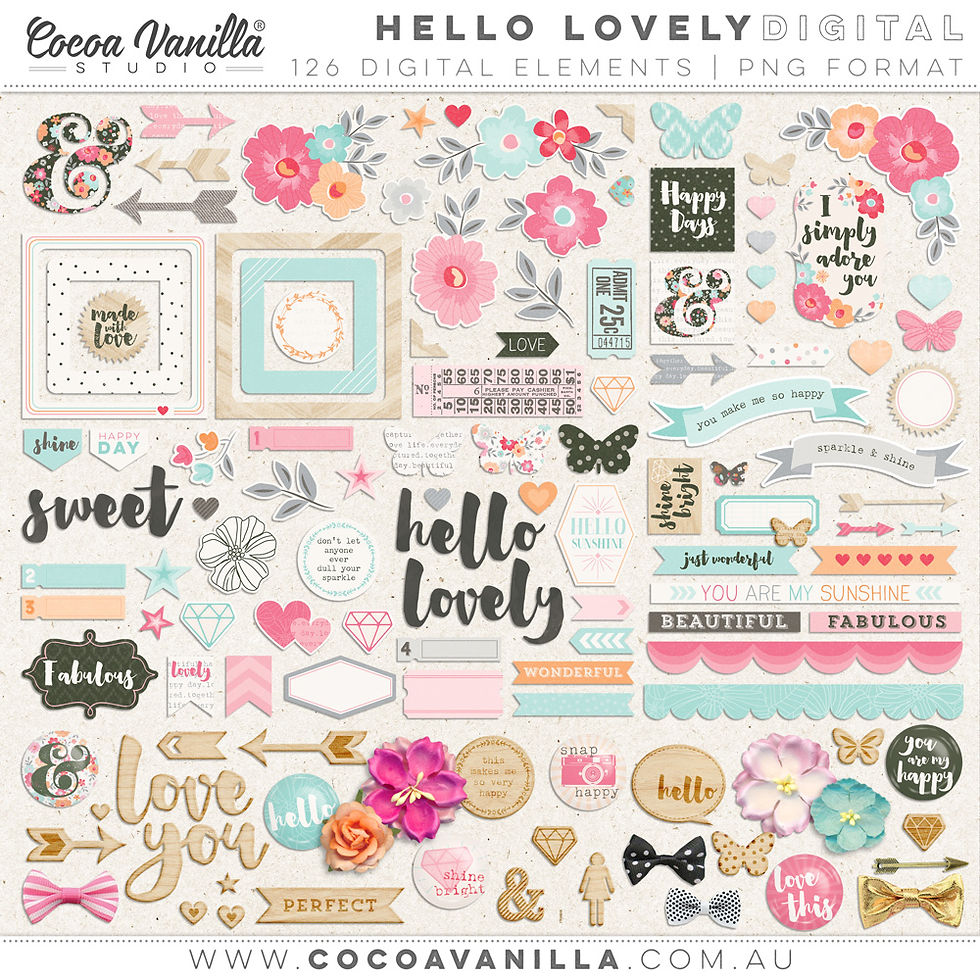
FREE SPIRIT DIGITAL PAPERS
**PLEASE NOTE: These are digital files. NO PHYSICAL PRODUCT WILL BE SENT**
Includes 12 Digital Papers from our Free Spirit Collection.
Each paper is 12" x 12" | 300 dpi | JPG Format | RGB
Personal Use Only.
Instant Download: Once your order is complete, you will receive links to download your digital products in the thank you page of the checkout, along with an emailed link that will last for 30 days.
What are tariffs, and why do they exist?
A tariff is a tax placed on goods imported into a country. Customs collect tariffs to regulate trade, protect domestic industries, and generate government revenue. Whenever international orders enter a destination country such as the United States, customs agencies assess the contents to determine if duties or fees apply.
How do US shipping & import duties work at checkout?
To comply with US customs regulations, all shipments entering the United States are subject to local import duties, processing fees, and taxes regardless of the package value.
We partner with Zonos and Australia Post to process these charges upfront using a Delivered Duty Paid (DDP) system:
Upfront Calculations at Checkout:
When you enter your address, our cart automatically calculates the required import duties, taxes, and customs processing fees based on your specific items.
No Surprise Bills:
All customs charges are itemised in the cart, and collected in your store checkout total. You should not be asked to pay extra carrier handling fees or customs collection charges when the package is delivered.
Pre-Cleared Customs Processing:
Because the required regulatory disclaimers and duties are submitted electronically before departure, your package moves through US Customs and Border Protection without being held for unpaid fees.
Can you mark my parcel as a "Gift" or lower the declared value to help avoid duties?
No, we cannot mark orders as a "Gift" or declare a lower item value on customs documentation.
It is Legal Fraud
Under international customs regulations, falsifying customs declarations by claiming a paid retail purchase is a personal gift, or undervaluing merchandise, is considered tax fraud and perjury. As a business, falsifying these legal declarations carries severe penalties, including hefty fines.
Risk of Package Seizure & Delays
US Customs uses automated screening systems to flag commercial parcels falsely marked as gifts. If a parcel is flagged, customs agents will open and inspect the package which leads to extended shipping delays, the assessment of duty re-evaluations, additional penalty fees for the recipient, or confiscation of the shipment.
We process all duties and taxes transparently upfront at checkout through our Delivered Duty Paid (DDP) setup so your parcel arrives safely at your doorstep without illegal workarounds or surprise hold-ups!
How do I know the correct tariff rates are being charged?
We know that international customs rules can feel confusing. To protect our customers from overpaying and to prevent unnecessary customs delays, we don't rely on generic automated guesses.
Item-by-item Auditing:
Every single item in our catalog - from small batch embellishments to specialty papers - has been individually audited and verified against the official US Harmonized Tariff Schedule (HTS). We verify the exact material composition, manufacturing origin, and 10-digit tariff code for every product line down to the single piece.
Precise Material & Country Mapping
Tariffs vary depending on whether an item is paper, plastic, or fabric, as well as where it was manufactured. We map every product line accurately (distinguishing Australian-made goods from imported components) so that you are assessed the exact legally required duty.
Integrated Pre-Filing
Because every product code and customs description is fully mapped with Zonos, your entry data is electronically transmitted to US Customs before your parcel even leaves Australia. This eliminates the chance for code mismatches, prevents double-taxation, and ensures your package moves through border processing cleanly.
Why are there so many different tariff rates?
Every physical product is assigned a specific Harmonized System (HS) code based on its material, shape, and intended use. Custom tariffs aren't "one size fits all" - for example, scrapbook paper, chipboard stickers, and puffy stickers each fall into separate tariff categories with different default rates set by local laws.
Why do multiple tariffs apply to most items?
Certain products carry more than one tariff charge depending on how and where they were manufactured:
General (Base) Duty: The standard customs rate based strictly on the product type and material, and vary between product classifications.
Trade or Regulatory Tariffs: Additional duty surcharges (such as US Section 301 tariffs) applied to specific countries of origin or specific product types.
For example, if an item is made from plastic or imported from a region subject to trade surcharges, those additional trade tariffs stack on top of the base duty rate.
Why does the "General Rate" vary so much between products?
The "General Rate" is not a single rate, and varies between product types - from as little as 3% all the way up to 25% for some categories. Countries set individual tariff rates based on local economic priorities:
Raw & Basic Materials: Often carry lower duties to make manufacturing inputs affordable.
Finished Goods & Specialty Crafts: May have different rates to balance trade with local producers.
Specific Material Classifications: For example, die cut ephemera (Chapter 48) has a different duty structure than puffy embellishments (Chapter 39) or wood veneer shapes (Chapter 44).
Why does a "Forced Labor" Tariff apply even if items are made in Australia?
Under United States trade laws (such as Section 307 of the Tariff Act and the Uyghur Forced Labor Prevention Act), US Customs and Border Protection conducts automated screening across all incoming international trade entries based on product tariff categories (such as textiles, paper, and plastics).
Automated System Triggers: Customs screening software looks at tariff classification codes rather than the scale of the seller. Because these checks are automated, they screen all goods falling under specific product codes, whether produced in a large factory or crafted by an individual artisan in Australia.
Supply Chain Transparency: These regulations require customs software to verify that neither the finished product nor its raw component materials (such as raw paper pulp or base plastics) originated from forced labor regions.
What are "Section 301" Tariffs?
Section 301 tariffs are country-of-origin trade surcharges imposed by the United States government under Section 301 of the Trade Act of 1974. Rather than applying to all international trade, these specific tariffs target goods manufactured in China to balance trade practices and protect domestic industries.
Follows Manufacturing Origin, Not Shipping Location:
Section 301 tariffs are determined strictly by where a product was manufactured, not where it ships from. If an item was produced in China and imported to Australia, shipping it onward to a customer in the US still incurs the US Section 301 surcharge.
Stacked On Top of Regular Duties:
Section 301 duties are not a replacement for standard customs duties; they are an extra percentage stacked on top of the base US tariff rate (typically ranging from an extra 7.5% up to 25% or more depending on the material).
Applies to Small Orders & Direct Parcels:
Under US import rules, Section 301 surcharges apply to all commercial goods regardless of shipment size or value.
Do import tariffs apply to digital products?
No. Customs import tariffs do not apply to digital downloads. Here's why:
Purely Electronic Delivery
Import tariffs and HTS codes are designed strictly for physical goods crossing a physical border. Digital items - such as downloadable cut files (SVG/PNG), and printable scrapbooking collections - are delivered electronically over the internet. Because they do not pass through a customs port or border facility, US Customs (CBP) does not assess import duties or tariff charges on them.